Maybe we should stop altering our bodies to compensate for a lack of human connection? Peter Parker says yes!
On an otherwise boring Thursday, I did a last-minute scan to see if there were any seats available for Spider-Man: Brand New Day. When I saw a rare seat available in the third row, just far enough away from the screen to not regret my decision, I purchased a single ticket.

As soon as the intro played, I found myself scrambling to remember what happened in the last Spider-Man movie let alone the rest of the franchise, information which had been untouched in my mind for years.
However, the interconnectedness of the Marvel universe didn’t matter so much as I was focused on the timely statement on male loneliness and human connection that had been spun into the story.
SPOILER ALERT!!! Proceed at your own risk!!! The plot of the movie will be spoiled!!! And all the quotes below are paraphrased because… I was paying attention to the movie.
In Brand New Day, Peter Parker is super lonely after his best friend Ned and lover MJ had their memories wiped of him, and his Aunt Mae died. He pours himself into being the best superhero he can, working all the time. As our new antagonist describes him, Peter is living a parody of a sad, single guy in his twenties—including takeout containers, free weights, and protein powder all over his apartment.
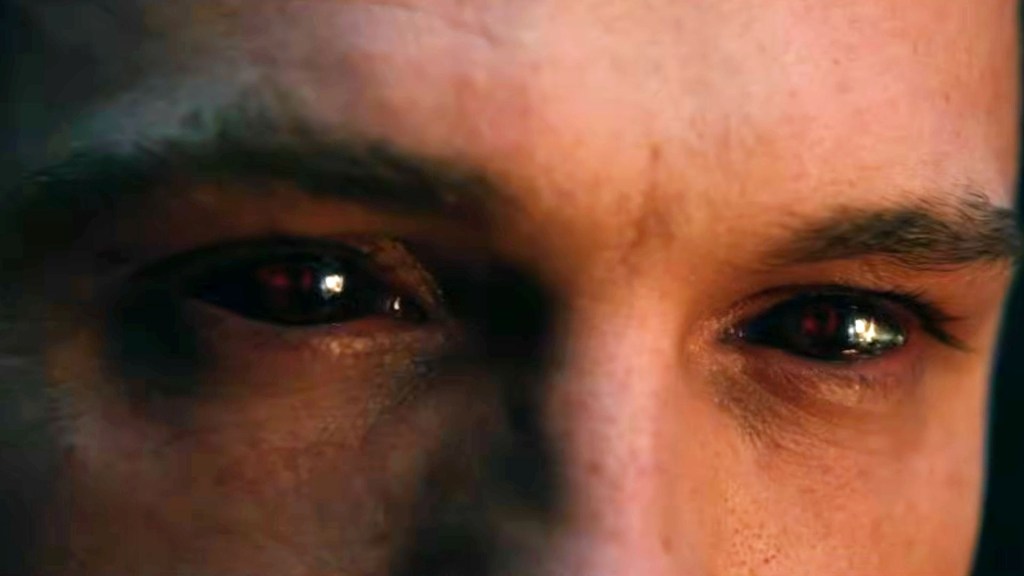
Peter’s DNA is slowly becoming more spider-like, leading to dark beady eyes and organic webs that don’t work with his mechanized shooters. His spidey senses are changing, becoming more sensitive and volatile, and thus his ability to be the friendly neighborhood superhero. This, we learn, is amplified by stress and loneliness.
To dull this “monster” that is growing inside of him and suppress his growing arachnid DNA, Peter turns to Dr. Bruce Banner, also known as The Hulk. He seeks to keep the spider parts that allow him to be Spider-Man and turn off the bad parts that make him monstrous.
To that, Bruce asks him, how do you decide what’s good or bad in nature?
A wonderful question, Bruce! Because who are we to determine the good traits inside us and the “bad” ones we must isolate out of our systems? Who are we to place that subjective human judgment on the force of nature?
Peter was metaphorically falling down the same path as men in the manosphere—suppressing some traits (in manosphere’s case, their feminine ones) in favor of an optimized self (pure alpha masculinity). This path, genetically engineering oneself instead of facing the root of the problem is all too familiar.
As Peter struggles with his internal monster and declining spidey skills, he reunites with his lover MJ, who doesn’t remember him. But as soon as he’s slinging through the air with her in his arms, his webs are working seamlessly again. The power of love!
MJ tells him the DNA inhibitor tech he’s working on is serious stuff, and says she hasn’t seen him act like a monster in the few hours they’ve been together—coincidentally when he’s been feeling his not-yet-requited love.
In addition to the Hulk, Peter has another ally in this movie—Frank Castle, aka The Punisher. I had to Google this one, SORRY! He’s apparently an “antagonist turned anti-hero” who’s frenemies with Spider-Man, who saved him on Staten Island one time. He’s super big into machine guns—biiiig macho man.

Spider-Man, the Hulk, and Frank are after a young, telepathic woman named Jean who can mind jump and inhabit different bodies. She’s looking for her telepathic sister Sarah, who was taken by the Department of Damage Control and mentally sent her a message, the word V-MAX.
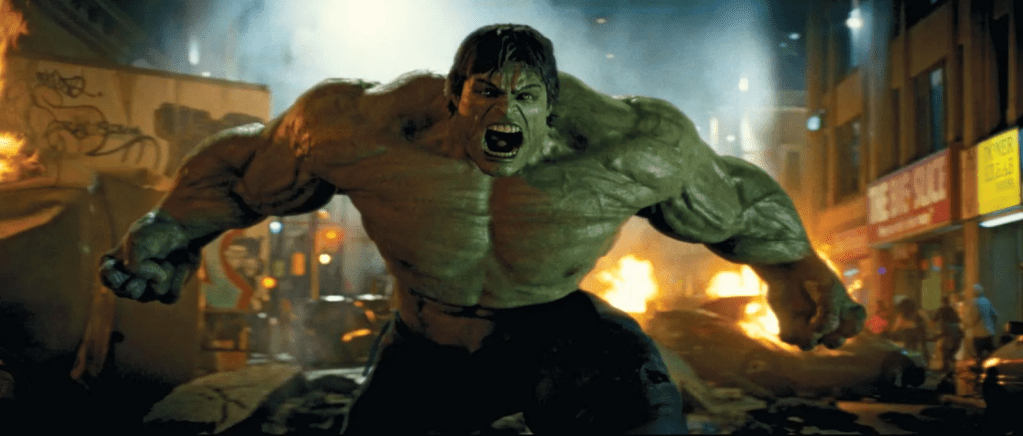
In a fight scene at Damage Control, when the superheroes are trying to stop her from infiltrating a vault, The Hulk damages his DNA suppressor device and becomes “the biggest he’s ever been,” according to Peter. Masculine man to the max!
Peter and The Hulk spend their time fighting a losing battle against each other and the monsters that live inside them instead of the actual threat at hand, perhaps a metaphor for where men are focusing their energy these days.
The Hulk is so angry that Spider-Man cannot re-attach an inhibitor to his skin. The Hulk’s unbridled anger is winning, but at the culmination of the fight scene, Peter looks into his eyes and says, “Bruce, it’s Peter. I am your friend.” The Hulk calms down and Peter’s growing spider eyes disappear without a DNA device—another win for human connection!
Spider-Man is showing young audiences, particularly boys, that to be your fullest and most special self, you need human connection. Any “bad” feelings that lurk inside, representative through the biggest Hulk rage ever seen, can be quelled not by a DNA-altering device but by love and friendship.
Damage Control eventually captures Jean and experiments on her brain. She looks up to see V-MAX printed on the vent in the lab. She realizes the last thing Sarah saw before she died was that vent, strapped to the same chair as Jean.
Through her deep love and heightened grief knowing her sister had died, Jean’s powers amplify and she explodes energy across the entire city, freezing anyone in a mile or two radius and breaks free. While Bruce and Peter have been installing inhibitors to prevent dangerous displays of emotion, Jean immediately rips hers out. She doesn’t even consider suppression, and acknowledges that her powers have gotten stronger. Feeling her emotions is an unquestionable asset for her, not a threat.
Peter, having realized her wholesome intentions, fights his way into the building and speaks with Jean about friendship, trust, and love.
At first, Jean is skeptical about deep relationships. She’s experienced the same kind of loss and mistrust as Peter. She reminds him that his so-called “friends” from Damage Control had a whole task force specially designed to fight him in case he showed up. She claims that people are monsters, and you shouldn’t trust them anymore than they trust you. She tells him “people like us are special, we don’t get to have normal friends or family.”
Peter, who is also mourning the loss of those closest to him, can relate to this. Jean jumps into Peter’s brain and hears Aunt Mae telling both of them that “Sometimes, being special will make it feel lonely. People can do monstrous dark things to you.”
Aunt Mae says, “You’re beautiful—we don’t love you because you’re special, we love you because you’re you. That’s your deepest responsibility, don’t forget it, no matter how powerful you become.”
Both Jean and Spider-Man have experiences and powers that have isolated them from their friends and family, but Aunt Mae accepts them for who they are. She teaches them they don’t need to become special to be loved, and they’re not loved only because they are special.
This speaks to an attitude pervasive in the manosphere, a distorted sense of dominance and exceptionalism that tells young men that love (from women) is a given if they are special. The manosphere focuses on self-improvement over community, isolating men as they lean into this tough, fighter facade.
When Peter pours himself into being Spider-Man, it takes a toll on his body, health, and his balance between spider and man. It even gives him no time to remember the names of his colleagues’ kids. And when he faces those consequences, he has no one to turn to.
In the face of loss, Jean immediately confides in Peter and discusses both their prolonged loneliness:
“Just because we can do something alone doesn’t mean we have to do this alone.”
“We can’t, I’ve been trying, it doesn’t work. I have no one.
“You have me.”
Then, with dramatic timing, Peter gets struck by a bullet (fired by Frank), and is whisked to the hospital.
There, Frank cries that he hurt Spider-Man and that he has never had a friend like that. Frank, of note, had lost his family and when MJ comments on his cabinet shrine for them, he tells her to never ask questions about them.
All three men, Spider-Man, Frank, and The Hulk, have been suppressing their feelings and unleashing their pent-up emotions through uncontrollable violence. It is (of course) a young woman, who has been through the same heartbreak as them, who first processes her own emotions and then immediately restores everybody else’s.
Jean’s powers bring back Ned and MJ’s memories of Peter, connect him with Aunt Mae, and even give Frank a friend. Peter learns about the value of human connection in bits and pieces throughout the story, but it’s not until Jean enables the connection with his loved ones that he truly embraces it.
Jean does not benefit from her work—as soon as she gains a connection with Peter, he is shot. And not only does Jean persevere through the depths of her grief all by herself, she goes straight to the hospital and “uses her powers” to heal Peter, a scene not shown in the film but mentioned in a brief aside from Frank.
A story of a young man, tempted by bodily enhancements to fight the consequences of his loneliness and instead finding the power of human connection, is important, especially in a film with such a large audience.
But it also showed the emotional and magical work a young woman does behind the scenes to make that happen, caring for both her own emotions and everyone else’s.
Is his loneliness something that Peter Parker would’ve been able to escape by himself, or is women’s unpaid labor still the only cure?


 catfitz
Leave a comment