Miss Piggy has always demanded the spotlight, and she’s about to get it. Disney is priming the world for another Muppets return and Miss Piggy will be at its center.
My essay examines the Muppets’ tumultuous cultural presence and Miss Piggy’s past and future feminism to understand where her return fits into culture now.

The Muppets
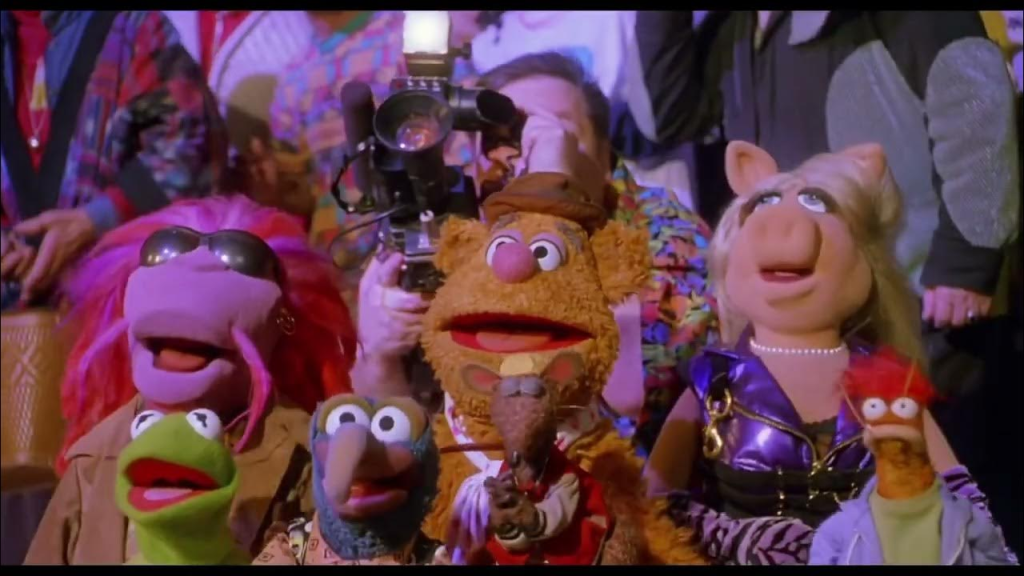
The Muppets have had a rocky history. Since Disney’s acquisition in 2004, the company has struggled to balance the franchise’s broad audience demographics. There have been several attempted “revivals,” moments when Disney tried to force the characters into every crevice of popular culture, but none seemed to last.
In articles for the NYT, one in 2008 and one in 2015, NYT Hollywood reporter Brooks Barnes outlines two of these attempts, noting that “The Muppets are hardly moribund, but they do represent one of the most striking examples of franchise fumbling in Hollywood history.”
The Muppets first underwent a “fuzzy renaissance” in the late 2000s, he writes, and received the “Hannah Montana treatment” to expand the franchise. They were everywhere, from Muppet-version sketches of popular shows to various merchandise collabs.
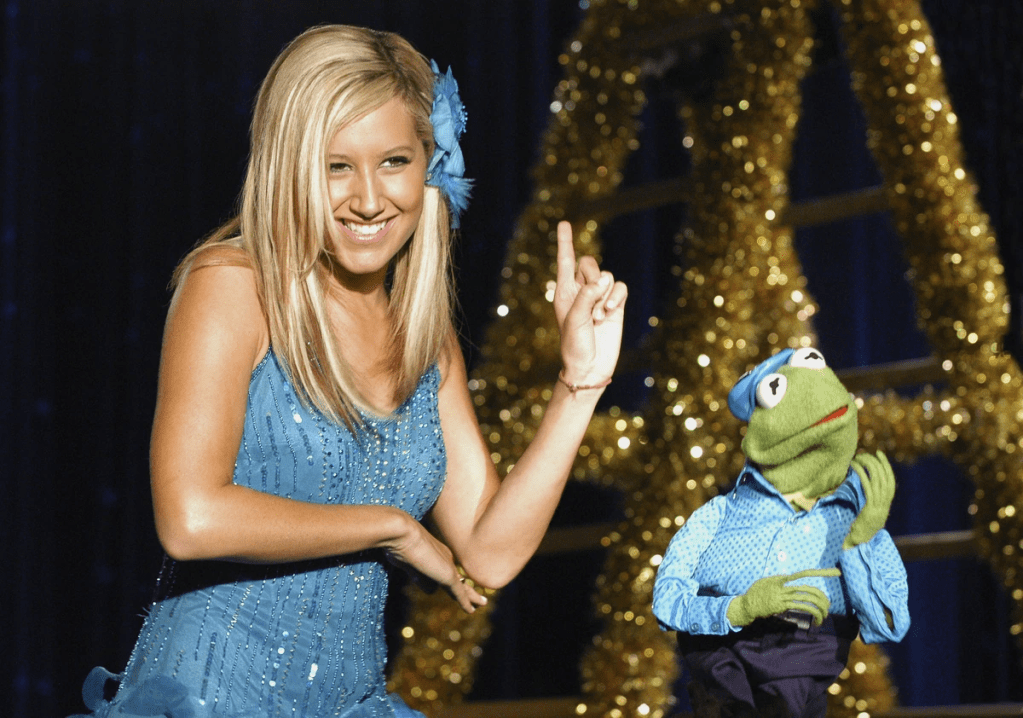

After a strong-ish run in the 2000s and early 2010s that culminated in one of my favorite movie musicals of all time, The Muppets (2011), and a collective star on the Hollywood Walk of Fame in 2012, the Muppets drifted yet again into only mild commercial success.
Side note: I think about this person who got the “Man or Muppet” lyrics tattooed across their entire body every single day.

In 2015, there was another attempt to reinvigorate the franchise and introduce it to a younger generation. Barnes notes that “‘The Muppets’ will intentionally serve up nostalgia, at least to a degree,” but that “playing to misty-eyed older fans while feeling contemporary enough to attract younger new ones is a difficult magic trick to pull off”—one that they failed the last time.
Disney’s new efforts consisted of two Muppet ABC comedies. First came “The Muppets,” a mockumentary-style show similar to “The Office” that followed the production of the second show, “Up Late With Miss Piggy.” We got more insights into the character’s personal lives and a storyline where Kermit dated an ABC executive named Denise…who was also a pig. Both shows were canceled after one season.
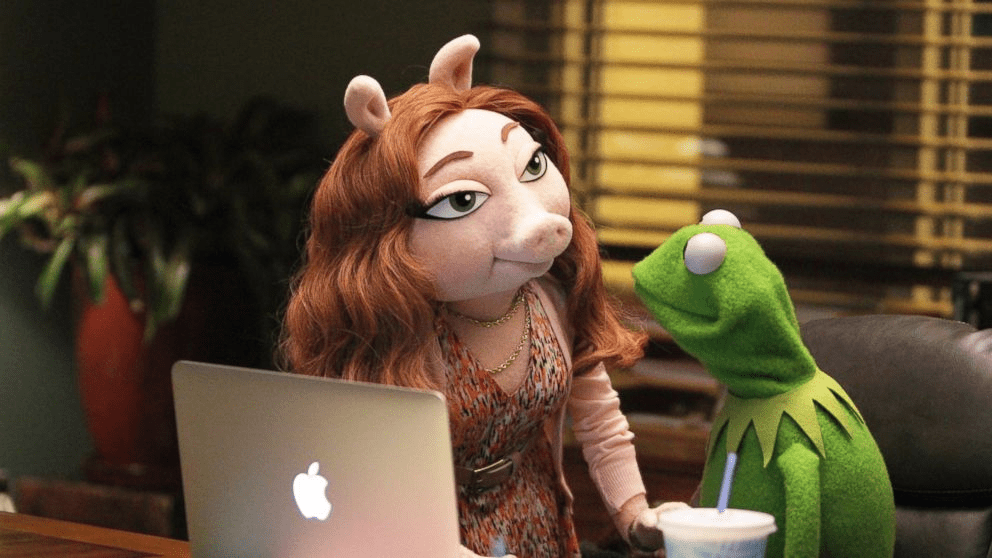
“The Muppets” (2015) veered so off brand that The Guardian wrote, “This version of Kermit is absolutely unrecognisable from anything that’s ever come before. This Kermit badmouths fellow celebrities, openly discusses his sex life and, at one point, describes his life as “a living hell”. That’s not who Kermit is.”
Over the years, Disney’s brand strategy for The Muppets has been throwing spaghetti at the wall and seeing what sticks. Each attempt reflects a desire to align the franchise with contemporary culture, and understanding where they’ve failed helps us piece together their moves going into 2026. I’m sensing yet another Muppets revival, and we’ll have to wait and see if Disney applies a more strategic approach.
The Muppets in 2026
The Muppets have begun to creep back into the public consciousness; Disney’s testing yet again where they fit in contemporary culture through theater, social media, comics, fashion, and themed in-person experiences.
The franchise’s 70th anniversary this past year brought a weekly character spotlight on social media, Muppet-variant Marvel comic covers, and even a heartwarming graduation speech by Kermit at the University of Maryland, where Jim Henson attended. They also announced a brief Broadway run with a comedian (which didn’t do as well as expected) and a tasteful Gap collaboration.
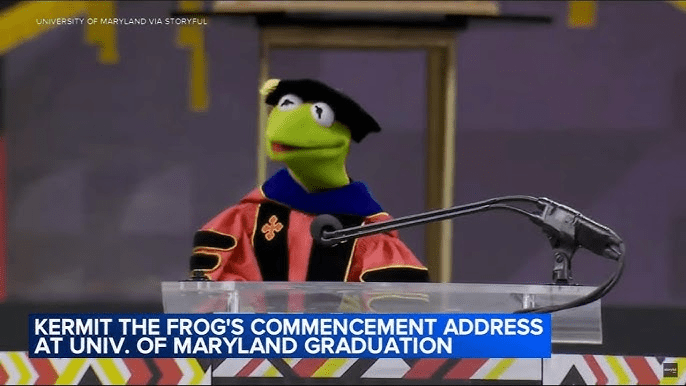
If that doesn’t convince you of their return, I’ve seen a statistically significant number of Muppets carousels on various meme accounts I follow, and they’re always ahead of the trends.
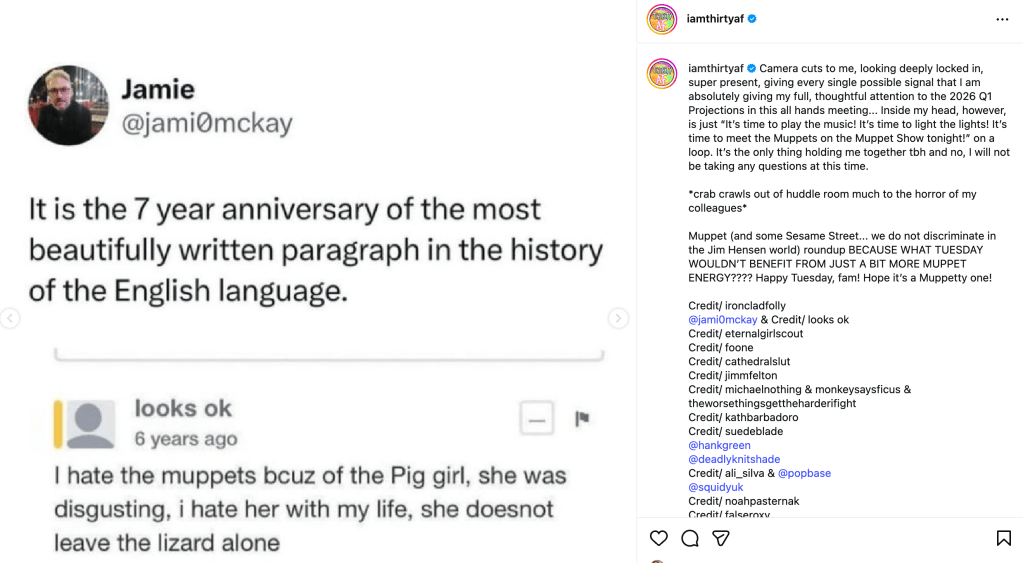
This time around, in efforts to fuel nostalgia while also attracting new fans, Disney has closed MuppetVision 3D at the parks, removing a long-standing attraction and leaving fans with a Muppet-shaped hole in their hearts.
Next year, The Muppets will celebrate the 50th anniversary of “The Muppet Show” with a revival special featuring Sabrina Carpenter, our current pop princess. They will also take over the Rock ‘n’ Roller Coaster at Disney’s Hollywood Studios as its new resident rock stars, replacing Aerosmith when the ride closes in early 2026 and reopens later in the year.
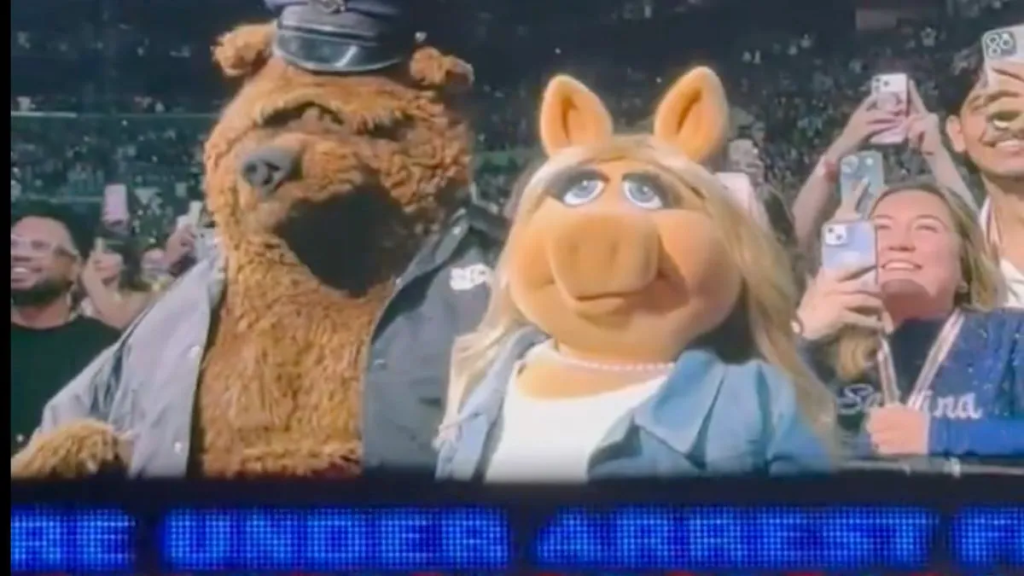
Sabrina Carpenter is the perfect cultural bridge for the Muppets’ comeback, and especially for Miss Piggy. Their personalities align: both possess tongue-in-cheek sarcasm, strong aesthetics, glamor, and theatrics. Sabrina’s Short n’ Sweet tour, with its fake live-show framing and sketch-like interludes, mirrors the original “Muppet Show” and “Up Late with Miss Piggy.” Recently, Miss Piggy (and Bobo the Bear, dressed as a security guard) appeared as the celeb guest at Sabrina’s tour in a segment where she “arrests” someone before performing her song “Juno”—a clever promo for their upcoming collab.
A Muppet Show special is a good idea for an audience eager for reboots and throwbacks. In an age defined by artificial intelligence and a widely discussed “loneliness crisis,” live, flawed and collaborative art, whether human or Muppet, is exactly what people want.
There’s comfort in camaraderie and seeing the effort, love, and joy that went into a project. Disney is doing this successfully elsewhere, from the newly released Eras Tour docu-series that shows how Taylor Swift’s global phenomenon came together to the renewed success of ABC’s Dancing With the Stars this fall, which saw record voting participation and leaned into the vast repertoire of Disney-owned content.
Miss Piggy
While all of the Muppets have a special place in my heart, Miss Piggy has always been a favorite. She was even my Google account profile picture before I started applying to jobs and had to switch to something slightly more professional.
She’s an obvious candidate for pulling the franchise back into the mainstream. Beyond her similarities to Sabrina Carpenter, she maintains ties across contemporary culture. From being a guest judge on Rupaul’s Drag Race in 2021 to potentially inspiring singer Chappell Roan, she’s ventured into queer spaces. She also moves in step with various cultural moments, including the girlhood and feminine rage trends of 2023, which positions her to slide into whatever broader trend that culture veers into next without it feeling forced. Even her visual aesthetics align with recent trends like maximalism or mob wife.
Miss Piggy’s Feminism
One of my favorite parts about The Muppets is that they are fictional, non-human characters yet they also exist in the outside world. They are able to publish books, win awards, go on talk shows, and hang out with celebrities in real life. However, this also opens them up to the complicated politics of being a real life public figure.
I’ve read enough celebrity memoirs to sympathize with the challenges of fame and understand the nuances of sharing personal political beliefs, using your platform for good, and protecting your brand, personal life, and sanity.
But what happens when a public figure is fully fictional and their opinions are carefully crafted by a global multi-media corporation?
I’m interested in this dynamic and how Disney will navigate it as it boosts its Muppets content. As Kermit said at a 2015 Television Critics Association press tour: “Like most Hollywood stars, we are wholly owned subsidiaries of some big company, and, you know, that gets strange.”
I did some digging into Miss Piggy’s past and found an impressive and expansive resume: a New York Times bestseller, an Academy Award nominee, a guest at King Charles III’s coronation, and…a feminist.
In 2015, Miss Piggy was honored with a Sackler Center First Award from the Elizabeth A. Sackler Center for Feminist Art at the Brooklyn Museum, which celebrates women breaking gender barriers and remarkable achievement in their fields (Yes, that Sackler family…).
Other recipients of this award include Anita Hill, Toni Morrison, and Angela Davis. What has Miss Piggy done that places her alongside these high-profile female changemakers?
Miss Piggy answered that herself in a questionable TIME Magazine essay, in which she insists that she is a feminist because she does not fit the popular image of a feminist.
Instead of marching in women’s rights parades, she writes, she marches down Fifth Avenue to go shopping. Instead of burning her bra, she saves money and doesn’t waste her high-quality intimates.
In other words, because Miss Piggy says she’s a feminist, she is one, no matter her actions. The future of feminism, she insists, is to be a lot more like “moi,” Miss Piggy’s way of referring to herself.
However, if you read beyond the article’s title (Miss Piggy: Why I Am a Feminist Pig), you find a vacant essay that denies any real political commitment. Miss Piggy distances herself from the traditional “negative” perception of a feminist and creates her own definition that centers consumption and individual success; it is reduced to a mere personality trait and is undermined by humor.
This all tracks for 2015, the height of the girlboss era and celebrity feminist bandwagoning, when being a feminist became crucial for personal branding. Neoliberal feminism in the early 2010s separated feminism’s public image from collective and intersectional struggle, instead emphasizing individual (mostly financial) success. Suddenly, after Beyonce danced in front of a “FEMINIST” sign at the 2014 VMAs, a wave of female celebrities walked back previous statements and vaguely declared themselves feminists.
Miss Piggy was no exception; her stumbling entry into feminism was unconvincing and stereotypical. Beyond the flimsy TIME essay, her persona on “Up Late With Miss Piggy,” as described by Willa Paskin in Slate, embodied many negative traits disproportionately used to criticize women, including “bossy, shrill, hysterical, irrational, [and] moody” (not frumpy though!).
Willa notes that this iteration of Miss Piggy is not like other complex and flawed female protagonists who are often “not primarily, or even particularly, concerned with being likeable.” Instead, Miss Piggy is simply intolerable and unpleasant.
In trying to distance herself from feminism’s “negative” reputation, Miss Piggy ends up embodying it. Her feminism is all attitude and no action, and furthers an association between feminists and being unlikeable.
Unable to sustain a convincing feminist argument, Miss Piggy concludes her essay by playing the “Porcine American” card and claiming “species-ism” as to why she is excluded from the movement. She says that pigs have long been associated with the opposite of feminists—male chauvinists—and that’s the reason people are doubting her politics, not her lack of substance. Not burning her bra, she argues, was not a political statement but common sense.
Miss Piggy will never face the consequences of her feminism. However, though she’s a fictional pig, she speaks to real issues, functioning as a mouthpiece to advance Disney’s political and PR goals without the risks and conflicts of interest of human spokespeople.
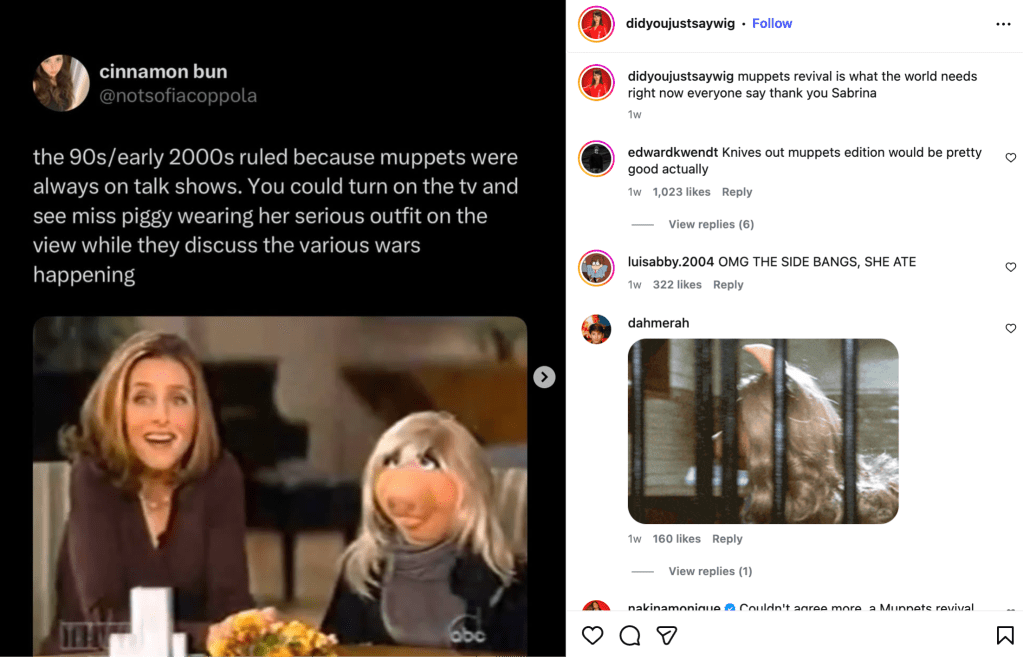
Given this, and the fact that she is literally voiced by a man, I don’t think we should listen to, praise, or amplify Miss Piggy’s “feminism.”
Yet, I can see the Internet calling her an “icon” next spring, celebrating her outspoken nature and diva personality. She will have viral moments and possess the franchise’s ability to insert herself into any mainstream narrative, not unlike brands’ social media accounts that quickly tap into relevant cultural moments.
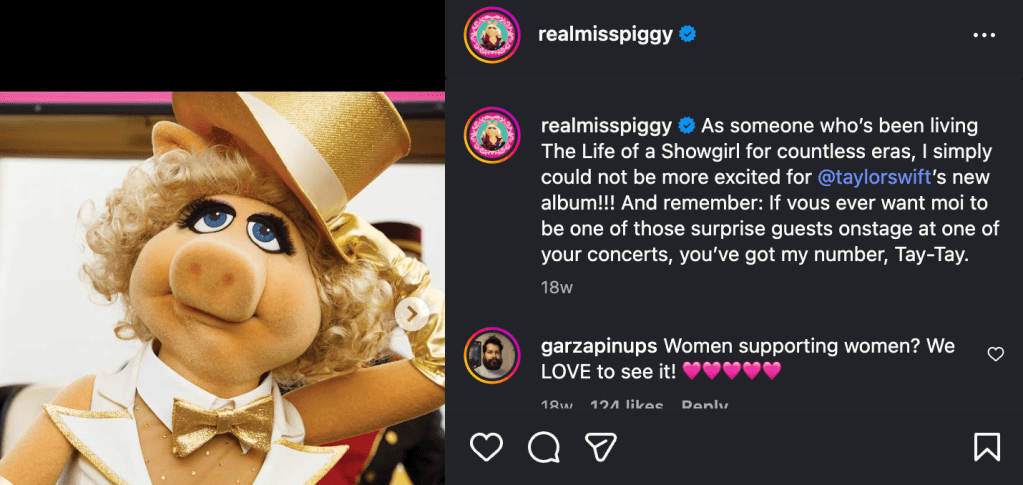
As a corporate Muppet, Miss Piggy poses no real threat to the patriarchy, but that may be exactly what will allow her “feminist icon” branding to catch on. With conservative feminism becoming more mainstream, her appeal rests in her ability to satisfy the internet’s desire for feminist icons while ultimately reinforcing the very non-radical and corporate values that keep her unthreatening and profitable.
Miss Piggy is not the feminist icon people need, but she may be the one that people want. As Disney gears up for another Muppets revival, her brand of feminism (snarky soundbites, assertiveness, and uninhibited aggression) will likely take center stage.
Most people encounter feminism through popular culture, watching a clip on their feed instead of critically engaging with feminist publications or grassroots organizations. While this could be an entry point into the movement, it can also replace political engagement and provide an illusion that feminism is already resolved.
Mainstream feminism will always be restricted by corporate financial and reputational concerns. Just like Miss Piggy’s TIME essay, it serves business interests over the collective, and is never radical or structure-changing.
I’m not asking Disney to adopt a more nuanced and improved version of feminism, because I don’t think it will. When the company has attempted to rewrite antiquated narratives in its live-action remakes in the past, it has faced backlash from both ends of the political spectrum and lands in a safe and unsatisfying middle ground, pleasing almost no one.
Given Miss Piggy’s impending rise, I am wondering if and how Disney will approach her persona differently, and if and how she will appear in feminist narratives.
Barbie (2023) offers an example of feminism entering the mainstream through a corporate vehicle. While it was widely critiqued, it sparked a large conversation about modern feminism that I have to believe did some good. A new generation got a intro course on feminism, and timed alongside various “girlhood” trends, feminism (albeit simplified and white) briefly became center stage.
Barbie used nostalgia to expose its own unresolved feminist missions instead of smoothing them over. The film initially celebrates how Barbie has shown girls they can be anything, but the dolls realize that representation in Barbieland does not translate into actual power in the real world as soon as Ken returns with the patriarchy.
Even though Barbie brought feminist issues to the silver screen, it ultimately stayed within safe corporate limits. The whole thing could be seen as a PR move to make Barbie and Mattel seem more feminist. I mean, the biggest feminist monologue is delivered by a character who literally works for the company.
Just like Barbie, a historical yet very corporate character, Miss Piggy has the capacity over the next year to model accountability and introduce viewers to basic feminism, even if it also serves the interests and profits of a brand.
Whatever Miss Piggy does in 2026 will certainly spark conversation and be an interesting diagnostic touchpoint in this conversation of feminism in popular media.
My hope is that Miss Piggy evolves into something more provocative and riskier in 2026, expanding her feminism beyond just a feisty personality and declarative statements.
Miss Piggy has one hoof in fantasy and one hoof in the real world, and occupies a rare space that allows her to demonstrate new possibilities as much as entertain. Popular culture merges together reality and fiction and becomes a space of experimentation and imagination.
What would it look like for a fictional corporate puppet to push the boundaries of real-world female power?
And how will audiences take over her character and use for their own feminist projects, like putting her in conversation with Trump, who recently called a reporter “piggy?”
“I am waiting for a really strong and meaningful female pig role.” – Miss Piggy
Perhaps what The Muppets need for a successful and permanent reentry into popular culture is a truly impactful and culture-shifting moment like Miss Piggy finally being a feminist. Or at least as much as she can be as a fictional Disney pig.
If we don’t see it in her upcoming appearances, I have hopes that Emma Stone and Jennifer Lawrence’s recently announced Miss Piggy movie will give her the voice she craves. Jennifer called Miss Piggy a feminist icon and explored the idea of her getting canceled, which could allow Miss Piggy to reckon with her past missteps. While Barbie was thrust into the real-world for the first time, Miss Piggy is a seasoned pro; maybe in this film, she will finally make “moi” a legitimate part of feminism’s future.

 catfitz
Leave a reply to Charles Fitzgerald Cancel reply